2013 at the Movies: biggest disappointments

THE RAMBLER

I don’t have a Worst Ten Movie list because, unlike professional critics, I don’t have to see every movie. I did see over 190 first-run movies this year, but I try REALLY, REALLY HARD to avoid the bad movies. So my worst movie going experience is usually either 1) on an airline flight when I see a movie that I normally wouldn’t; 2) a hyped art film that disastrously falls on its face and/or really pisses me off (The White Ribbon); or 3) something I find on cable TV while channel surfing (Paul Blart: Mall Cop). But usually, the culprit finds its way aboard a long airline flight. Not this year.

In the purely disappointing category, I was underwhelmed by the Coen Brothers’ Inside Llewyn Davis, Pedro Almodovar’s I’m So Excited and The World’s End with Simon Pegg and Nick Frost. I was expecting much more from those filmmakers.

Of course, Only God Forgives (from the director and star of Drive, which I really liked) was a red-hot mess – but I had caught wind of the buzz before I saw it, so I really wasn’t surprised.  Same with The Great Gatsby, which I could tell was a stinker from the trailer.  And I did walk out of the French film Rich Is the Wolf; it’s about a wife who watches hours of video of her husband to figure how and why he went missing  – but after 40 minutes, I realized that I didn’t care what happened to him or whether she would find out.

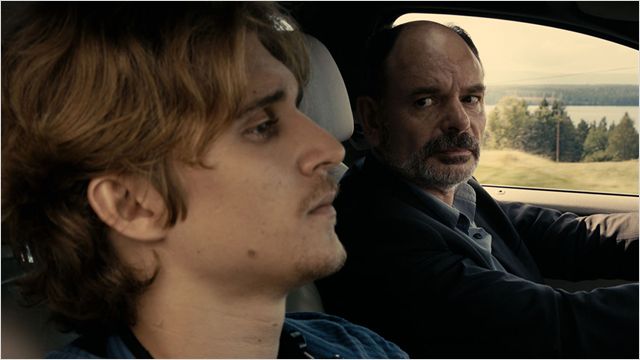
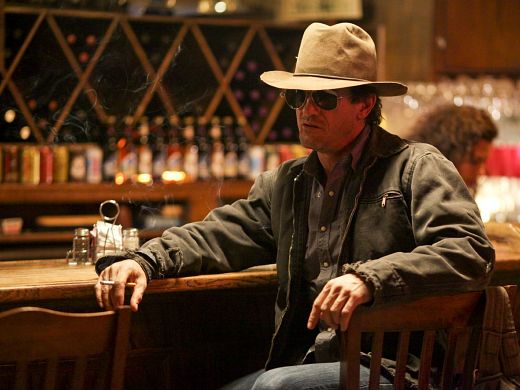
Notwithstanding all of the above, the clearly worst film that I saw in 2013 – and I’m talking epically, horrifically terrible – was Calvin Lee Reeder’s The Rambler. It’s a disjointed collection of shock pieces that turns from a tribute to David Lynch to an homage to Rob Zombie (if David Lynch and Rob Zombie were bad filmmakers).  In the low (I must say LOWEST) point, the Dermot Mulroney character dreams that he is strapped to a bed when a dummy dressed like an old hag plunges through the window above his head and vomits what looks like yellow paint on to his face and into his mouth. It is an extended vomit scene – 58 seconds (I timed it).

Finally, I re-watched the 1980 epic Heaven’s Gate, which had been the subject of much critical re-assessment this year – and it’s still epically bad.
2013 at the Movies: most overlooked

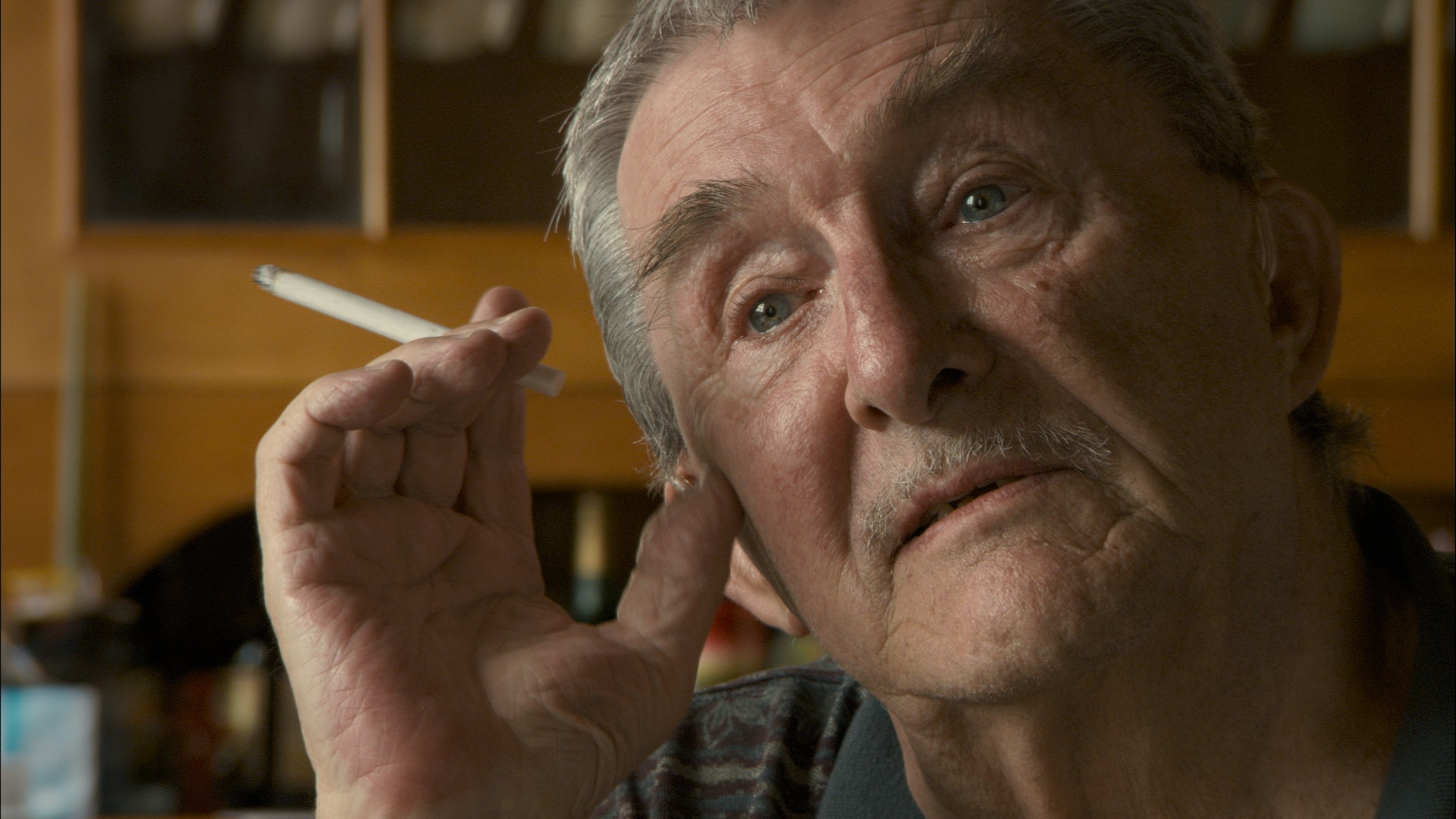
Michael Polley in STORIES WE TELL

Evangelizing for wonderful movies that are overlooked is the primary mission of The Movie Gourmet.  These four movies made my Best Movies of 2013. They are brilliant and everyone should see them.

Also on my list of the year’s best, it’s easy to say that Me and You is overlooked because it hasn’t even gotten a US release in theaters , DVD or VOD.

Also flying under the radar were the fine thrillers Prisoners and Shadow Dancer, along with the year’s best comedy, In a World….

2013 at the Movies: the year of fathers and sons

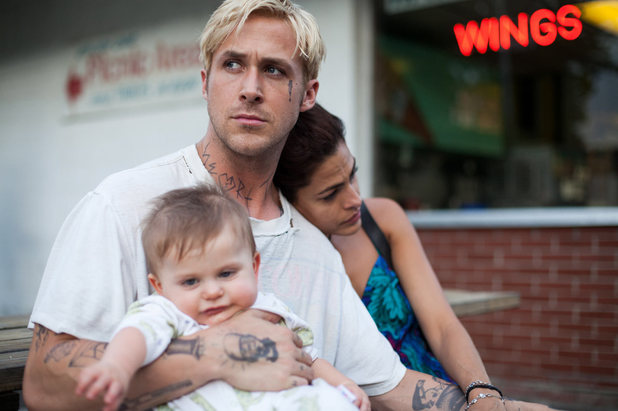
Ryan Gosling and Eva Mendes in THE PLACE BEYOND THE PINES

2013 gave us an uncommonly thoughtful crop of movies that explored the relationship of fathers and sons. The most widely recognized was Nebraska, with Bruce Dern as the alcoholic and addled geezer whose bitterness is rooted in the frustration of his modest aspirations by both circumstance and by his own shortcomings. His son (Will Forte from Saturday Night Live) longs for a relationship with his father that he had never thought possible before.  The son makes a valiant effort, but the father is long past any sentimentality.  Dern has stated that he called upon his own experience with unsupportive parents to play the film’s most searing scene.

The Place Beyond the Pines reflects on the Old Testament passage “the iniquity of the fathers shall be visited upon the sons”. Indeed, the successes and flaws of fathers, and the choices they make, impact their sons. And sons are often driven to be like or unlike their fathers, to match them or to surpass them. At first, the story follows a familiar path for a crime drama – a motorcycle trick rider (Ryan Gosling) turns to bank robbery and has an encounter with a cop on patrol (Bradley Cooper). But the screenplay embeds nuggets about how both men feel about their fathers and how those feelings drive their actions. Both men have infant sons, and the father-son theme becomes more apparent as the story resumes fifteen years later with a focus on their own sons as teenagers.

The corporate farmer at the center of At Any Price is Henry Whipple (Dennis Quaid). Henry is a driven man, consumed by a need to have the biggest farm and to sell the most genetically modified corn seeds in southern Iowa. Henry is also stupendously selfish, utterly tone-deaf to the needs of anyone else.  Despite Henry’s dream to hand the business to one of his two sons, they despise him. The older son has avoided conflict by escaping to a vagabond life in international mountain climbing. The younger son, Dean (Zac Efron), plans his escape as a NASCAR driver and seems well on his path. Stuck on the farm for now, he can barely tolerate his father’s incessant grasping. We are left with two men who finally must appreciate who they really are, whether we like them or whether they like themselves.

In You Will Be My Son, Niels Arestrup (A Prophet, War Horse) stars as the owner of French wine estate who places impossible expectations on his son, with lethal results. The poor son has gotten a degree in winemaking, has worked his ass off on his father’s estate for years and has even married well – but it’s just not enough for his old man. The father’s interactions with the son range from dismissive to deeply cruel.  The father’s best friend is his longtime estate manager, whose health is faltering. The son is the natural choice for a successor, but the owner openly prefers the son’s boyhood friend, the son of the manager. The first half of You Will Be My Son focuses on the estate owner’s nastiness toward his son, which smolders throughout the film. But then the relationship between the sons turns from old buddies to that of the usurper and the usurped. And, finally, things come down to the decades-long relationship between the two old men.  Deep into the movie, we learn something about the father that colors his view of his son. And then, there’s a startling development that makes for a thrilling and operatic ending.

In the French film Rendez-vous in Kiruna, a selfish and curmudgeonly Paris architect takes a journey of grim obligation to northern Sweden and picks up a young Swedish lost soul for a road trip filled with funny moments. But the film’s underlying theme is the abandonment (literal or emotional) of sons by their fathers.   The most riveting performance is a truth-telling monologue by the young Swede’s grandfather.  It’s a wonderful moment – one of the most powerful on film this year.  The journey reaches its conclusions without any cheap or sappy sentimentality, but with a moment of realization and an opportunity for redemption.

2013 at the Movies: breakthroughs

Adèle Exarchopoulos in BLUE IS THE WARMEST COLOR

The year’s biggest breakthrough has to be 19-year-old actress Adèle Exarchopoulos, who delivered the year’s best cinematic performance in the year’s best movie, Blue is the Warmest Color.

American actress Brie Larson‘s star-making performance Short Term 12 showed her to be a big-time talent, possibly another Jennifer Lawrence.

Other remarkable breakthrough acting performances:

  • Elle Fanning in Ginger & Rosa (in which she, at her actual age of 14, played a 17-year-old).
  • Michael B. Jordan, thoughtful and charismatic in Fruitvale Station.

And here are the filmmakers whose work showed special promise:

2013 at the Movies: Most Fun at the Movies

The Movie Gourmet had a great year at the movies and here are the highlights:

1.  Taking The Wife to Bad Girl Night at the Noir City Film Festival.  Noir City is the great San Francisco celebration of film noir, and Bad Girl Night is an annual double feature of noir’s nastiest femmes fatale.  Now The Wife loves it too!

2.  Interviewing Cinequest’s international film programmer Charlie Cockey – a film finder extraordinaire and a man who devours culture in any form.   Watch for the interview when I preview the 2014 Cinequest.

3.  Seeing three wholly original films at Cinequest:  the German dark comedy Oh Boy (the debut from talented writer-director Jan Ole Gerster, the absurdist Czech comedy Polski Film and the offbeat The Dead Man and Being Happy, with its gloriously wacky road trip through the backwaters of Argentina.

4.  Seeing five of the year’s best films (Mud, Stories We Tell, Me and You, The Spectacular Now and Before Midnight) in a May fortnight that included The Movie Gourmet’s Film Rampage.

5.  I was the only audience member for Not Fade Away. I love sitting all alone in a theater because it makes me feel like a movie mogul in a studio screening room. Because I see lots of obscure movies at odd times like Monday nights and Sunday mornings, I am often part of a very small audience (five or fewer). But I hadn’t been the ONLY viewer since El Mariachi in 1992.

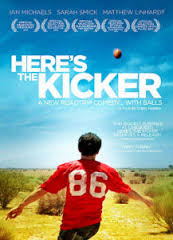
6. The DVD release of Here’s the Kicker featuring a blurb from The Movie Gourmet on the DVD cover.  I enjoyed this indie comedy, and I hope my blurb will persuade folks to see it.

heres kicker dvd

We remember Billy Jack

BILLY JACK (1971)
Tom Laughlin


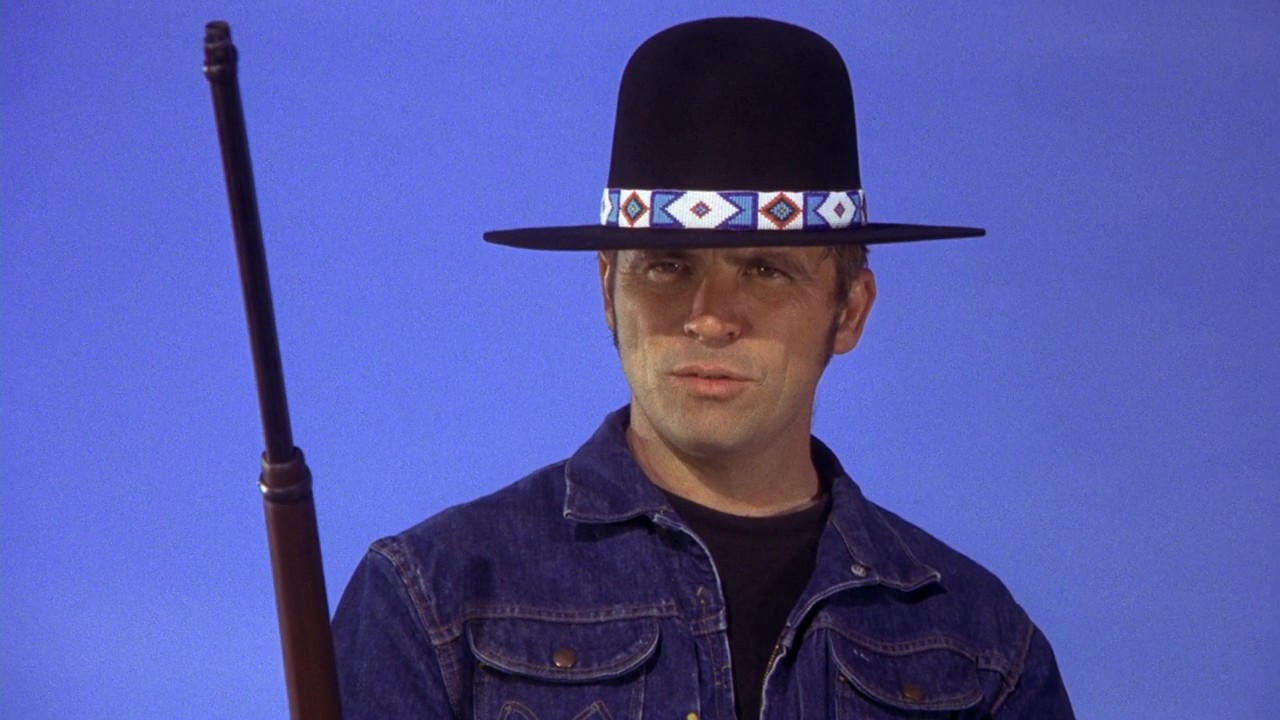
Tom Laughlin, the groundbreaking independent film maker who created the 70s iconic character Billy Jack, has died at age 82. Laughlin originated the character in his biker exploitation movie Born Losers (1967), and then fully unleashed him in Billy Jack (1971), The Trial of Billy Jack (1974) and Billy Jack Goes to Washington (1977).

Billy Jack is a Vietnam vet who embraces his own combo of New Age mysticism and Native American spiritualism and uses martial arts to kick the crap out of the bad guys who bully women, Native Americans and teenagers. Laughlin played a character along similar themes in his The Master Gunfighter (1975), only bearded and wielding a samurai sword.

The prickly Laughlin made and distributed his films independently, and Billy Jack and Trial were huge box office successes, among the most financially successful indies ever. For The Trial of Billy Jack, Laughlin engineered the then-unheard-of simultaneous release on 1500 screens. This excellent Bill Gibron article in Pop Matters describes this precursor of the Hollywood blockbuster strategy. Billy Jack was also the first widely seen martial arts movie in America.

Despite his innovations in the movie business, Laughlin never succeeded in making a good movie. Filled with clumsy acting and hackneyed dialogue, the films are still pompous, self-important and humorless.

Laughlin’s signature as a screenwriter is heavy-handedness. It’s never enough for the bad guys in the Billy Jack movies to be bad. They also have to be racist AND mean to animals AND sexually perverted. Billy Jack opens with the bad guys illegally raiding an Indian reservation to steal a herd of wild mustangs and herd them to a corral where they will be shot at pointblank range to bring in six cents per pound as dog food. One of the Billy Jack villains seduces a 13-year-old, insists on forcing a willing floozie at knifepoint and, for good measure, stakes a saintly teacher to the ground for a ritual rape. In The Trial of Billy Jack, a government henchman shoots a child – in the back – while he is cradling a bunny.

I have a Bad Movie Festival that features unintentionally bad movies that are fun to watch and mock. The Billy Jack movies are too painful for this list. While bad enough, they are gratingly platitudinous.

Laughlin was married since 1954 to his Billy Jack co-writer and co-star Delores Taylor.

Coming up on TV: a feast of crime movies

BULLITT

Here’s a treat – on November 26, Turner Classic Movies is celebrating Cops and Robbers with a feast of crime movies. I especially recommend:

  • The Taking of Pelham One Two Three (1974): A criminal mastermind (Robert Shaw) and his gang of commandos capture a NYC subway train and ransom the passengers; the transit authority police commander (Walter Matthau) must match wits.  Excellent cast includes Hector Elizondo and Martin Balsam.  I prefer this original to the 2009 remake.
  • Every police procedural from 1948 through today’s Law and Order and CSI owes something to the prototypical The Naked City (1948). Tenacious New York City cops solve a murder amid gritty streets and shady characters. Unusual for the time, it was shot on location.   Directed by noir great Jules Dassin, The Naked City won Oscars for black and white cinematography and film editing.
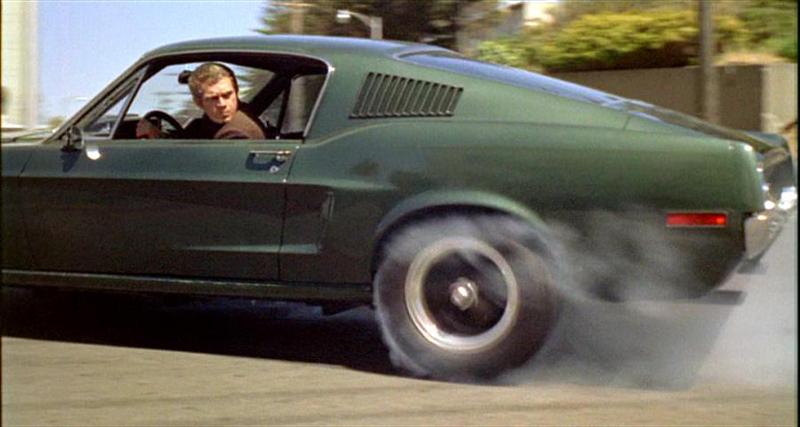
  • Bullitt (1968) features Steve McQueen and one of cinema’s most iconic and influential chase scenesMcQueen’s 1968 Ford Mustang Fastback  and the bad guy’s 1968 Dodge Charger careen through San Francisco, taking almost 11 minutes to race from Fisherman’s Wharf to Brisbane.  Classic.
  • The French make really good crime dramas, and Rififi (1955) is a standard-setting heist filmAfter the team is assembled and the job is plotted, the actual crime unfolds in real-time – over thirty minutes of nerve wracking silence.
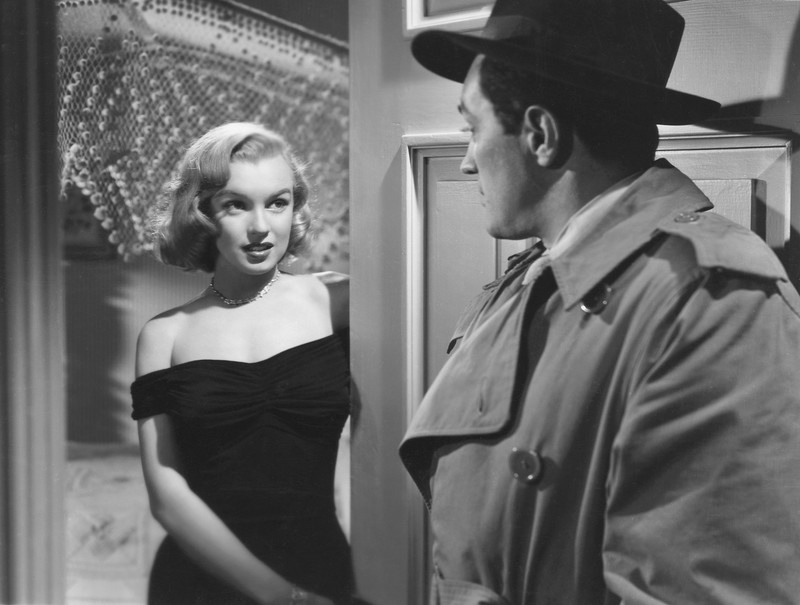
  • In The Asphalt Jungle (1950), the crooks assemble a team and pull off the big heist…and then things begin to go wrong.  There aren’t many noirs with better casting – the crooks include Sterling Hayden, Louis Calhern, Sam Jaffe and James Whitmore.  The 23-year-old Marilyn Monroe plays Calhern’s companion in her first real speaking part.  How noir is it? Even the cop who breaks the case goes to jail.  Directed by the great John Huston.
  • If you like your film noir tawdry, then Gun Crazy (1950) is for you.  Peggy Cummins plays a prototypical Bad Girl who takes her newlywed hubby on a crime spree.
THE ASPHALT JUNGLE

some laughs from Blue Is the Warmest Color

Here’s some silliness from the serious drama Blue Is The Warmest Color  – the stars Léa Seydoux and Adèle Exarchopoulos are being interviewed at the Toronto International Film Festival.  Seven minutes in,  Exarchopoulos gets the giggles and can’t shake them.  Even funnier, at the 16 minute mark, the actresses discuss wearing prosthetic vaginas with fake pubic hair for the notorious sex scenes.

French Cinema Now

RENDEZ-VOUS IN KIRUNA

I spent last weekend at the San Francisco Film Society’s French Cinema Now series, which features current French language movies that have not been theatrically released in the US (and may not be).   I’ve written complete posts on five of the eight movies that I saw. Here’s my summary (in order of my subjective ranking).

My favorite was the road trip to redemption, Rendez-vous in Kiruna.  A French curmudgeon takes an obligatory drive to northern Sweden, setting up some very funny moments as the film explores the oft unhappy relationships of fathers and sons.

In the drama Suzanne, a young woman makes some bad choices, and the consequences are shared by her father and sister.  Very well written and acted, Suzanne may be released in the US in mid-December.

Launched with great notoriety at Cannes, Stranger by the Lake (L’inconnu du lac) is a thriller set in a secluded gay cruising spot.  There is LOTS of explicit gay sex in this movie, and at least some of it is actual (not just simulated) sex.  It does work as a thriller, and it will get an NC-17 release in the US in late January 2014.

I liked Miss and the Doctors (Tirez la langue, mademoiselle), the kind of light romance that the French do so well and that Hollywood would turn into a series of sitcom moments.  Two pediatrician bachelor brothers fall for the single mom of a young patient – and then her ex returns to the scene to create a love quadrangle.  Miss and the Doctors is sweet and funny, and I think it would be popular with US art house audiences.  (The original French title translates as “Stick Out Your Tongue, Miss”.)

House of Radio (La Maison de la Radio), a wonderfully appealing observational documentary that takes us behind-the-scenes for a peek at the operations of Radio France.

Written and directed by its star, Valeria Bruni Tedeschi, A Castle in Italy (Un château en Italie) tells three dark story threads but in a very funny, even screwball, movie.  It had me until the sentimental and almost pretentious ending.  Not bad overall.

Bastards (Les Salauds) is Claire Denis’ dark revenge tale – well made but gratuitously disturbing – and even too disturbing for me to recommend.

My pick for the worst movie in the series was a French language film from Canada, Vic + Flo Saw a Bear (Vic + Flo ont vu un ours).  A 61-year-old lesbian is released from prison and reunites with her fortyish lover/crime partner to go straight.  Unfortunately, there wasn’t much to commend this film except for a bad ass female villain.  The story was pointlessly dark, and the audience did not respond well.  Afterwards, I was standing in line in front of a Frenchwoman who ranted, “Stoopeed Canadians – what do zay know about making films…I am just so glad that Jean didn’t show up – he would have puked.”  I actually like Canadian films, but this one sucked.

Farewell, Karen Black

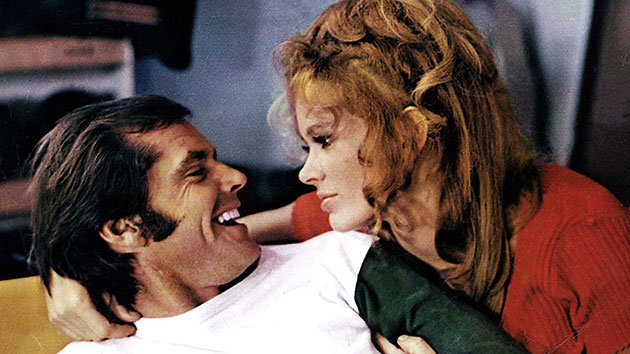
Jack Nicholson and Karen Black in FIVE EASY PIECES

Karen Black, one of the icons of 1970s American cinema, has died.  From 1969 through 1976 she starred in Easy Rider, Five Easy Pieces, Drive He Said, the Kris Kristofferson vehicle Cisco Pike, Portnoy’s Complaint, The Outfit (with Robert Duvall), The Great Gatsby, Robert Altman’s Nashville and Alfred Hitchcock’s Family Plot.  She excelled at playing sexually liberated and kooky women, generally downscale and down on their luck.  Her New York Times obit quoted this 1975 appraisal from Time magazine:

“Black brings to all her roles a freewheeling combination of raunch and winsomeness.  Sometimes she is kittenish. At other times she has an overripe quality that makes her look like the kind of woman who gets her name tattooed on sailors.”

My favorite Karen Black performance was her Oscar-nominated turn in Five Easy Pieces (1970) as Rayette, the girlfriend of Bobby Dupea (Jack Nicholson).  Brimming with alienation, Bobby is working as an oil field roughneck, and the diner waitress Rayette falls in love with him.  However, he comes from a highbrow family of classical musicians, and when he must revisit their world, it’s heartbreakingly clear that Rayette isn’t going to fit in.

Here’s the most famous scene in Five Easy Pieces from my Most Memorable Movie Food Scenes.  Karen doesn’t have much to do in this scene (besides reacting to Jack), but it’s nice to see her again.