Bay Area readers: If you’re going to take my advice and see the emotionally powerful and Oscar-worthy Alive Inside this weekend, try to attend one of the special screenings at Camera 7 Pruneyard in Campbell. Dan Cohen, the founder of Music & Memory, the non-profit that pulls Alzheimer’s patients out of their isolation with gifts of iPods, will take Q&As after the 2:30 and 4:45 shows on Saturday, August 9. Director Michael Rossato-Bennett will be present after the 2:30 and 4:45 shows on Sunday, August 10. And Camera 7 is collecting any music players that you may wish to donate to Music & Memory.
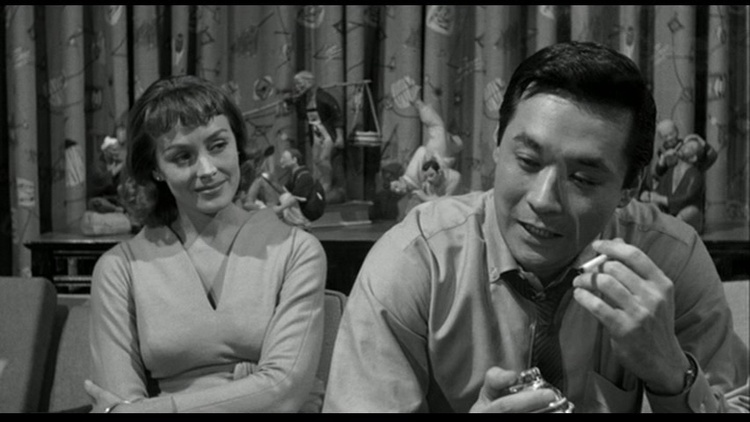
Actor James Shigeta, who along with writer-director Sam Fuller, broke ground in 1959’s The Crimson Kimono, has died at age 85. Shigeta was a fixture on mainstream television series, accounting for many of his 88 screen credits.
But his first movie role was in The Crimson Kimono, another sensationalistic and deliciously exploitative cop noir from the great Sam Fuller. Always looking to add some shock value, Fuller delivered a Japanese-American leading man (Shigeta), an inter-racial romance and a stripper victim. The groundbreaking aspect of The Crimson Kimono is that Fuller’s writing and Shigeta’s performance normalized the Japanese-American character. Shigeta’s Detective Joe Kojaku is a regular hardboiled, jaded and troubled film noir protagonist. Other than his inside knowledge of the Japanese community, there isn’t anything exotic or “foreign” about him – as you can see in the clip below.
Of course, Fuller certainly relished the fact that many 1959 Americans would have been unsettled by a Japanese-American man’s intimate encounter with a white woman – another groundbreaking moment in American cinema.
Interestingly, the American-born Shigeta , a Korean War vet, became a singing sensation in 1950s Japan before launching his US acting career.
The Crimson Kimono is available on DVD from Netflix and streaming from Amazon, iTunes, Vudu and Xbox Video; it also plays occasionally on Turner Classic Movies.
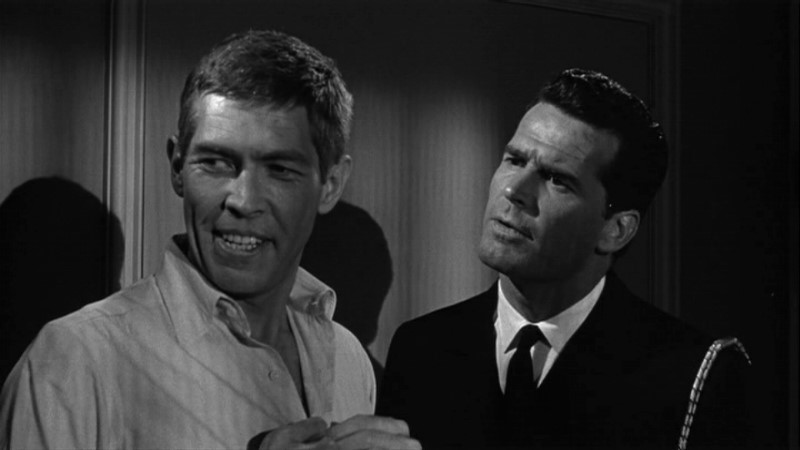
James Garner (right) with James Coburn in THE AMERICANIZATION OF EMILY
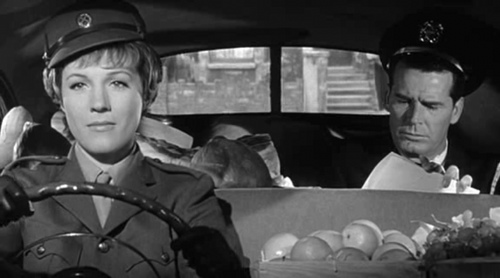
Actor James Garner has died at 86, known primarily for a brilliant television career highlighted by Maverick and The Rockford Files. Yet Garner was also a fine movie actor, and starred in an oft overlooked masterpiece, the 1964 The Americanization of Emily. Set in England just before the D-Day invasion, The Americanization of Emily is a biting satire and one of the great anti-war movies. James Garner plays an admiral’s staff officer charged with procuring luxury goods and willing English women for the brass. Julie Andrews plays an English driver who has lost her husband and other male family members in the War. She resists emotional entanglements with other servicemen whose lives may be put at risk, but falls for Garner’s “practicing coward”, a man who is under no illusions about the glory of war and is determined to stay as far from combat as possible.
Unfortunately, Garner’s boss (Melvyn Douglas) has fits of derangement and becomes obsessed with the hope that the first American killed on the beach at D-Day be from the Navy. Accordingly, he orders Garner to lead a suicide mission to land ahead of the D-Day landing, ostensibly to film it. Fellow officer James Coburn must guarantee Garner’s martyrdom.
It’s a brilliant screenplay from Paddy Chayefsky, who won screenwriting Oscars for Marty, The Hospital and Network. Today, Americanization holds up as least as well as its contemporary Dr. Strangelove and much better than Failsafe.
Almost twenty years later, Garner reteamed with Julie Andrews in one of the all time great comedies, Victor/Victoria. However, both Andrews and Garner have tagged The Americanization of Emily as their favorite film.
The Americanization of Emily is available on DVD from Netflix and streaming from Amazon, iTunes, Vudu and Xbox Video. It also plays several times each year on Turner Classic Movies and is next scheduled for September 24.
Julie Andrews and James garner in THE AMERICANIZATION OF EMILY
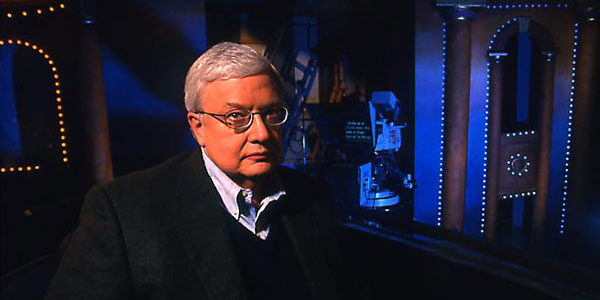
Yesterday I commented on the Roger Ebert documentary Life Itself. Today I’m reflecting on Roger Ebert as the main reason that my love of cinema grew, as did my passion for sharing under appreciated and overlooked movies. In other words, I wouldn’t be writing this blog if not for Ebert.
My college History of Film class and the groundbreaking movies of the 70s (The Godfather, Chinatown, Five Easy Pieces) had awakened my interest in movies. But Roger Ebert was the leading evangelist for independent and foreign cinema in the US. Without the Siskel & Ebert TV shows, I wouldn’t have known to seek out a French film like La cage aux folles or the debut features of indie directors John Sayles (Return of the Secaucus Seven) and Spike Lee (She’s Gotta Have It). Heck, I just looked at my list of 50 Greatest Movies of All Time, and, without Ebert’s guidance, I never would have seen The Seven Up series, Blue/White/Red, Secrets and Lies, and, probably, Do the Right Thing.
Along the way (and from technology to technology), I made it a point to seek out Ebert’s movie recommendations. The first show that I set up my massive 1982 VCR to record was Siskel & Ebert’s Sneak Previews. In the early 2000s, Roger Ebert’s was the first blog that I checked every day. The reason that I signed up for Twitter was to follow Roger Ebert.
The director Paul Mazursky, a master of the social satire and the topical movie, has died. He’s chiefly (and rightly) being remembered for his cinematic social landmarks: Bob & Carol & Ted & Alice, An Unmarried Woman and Harry and Tonto.
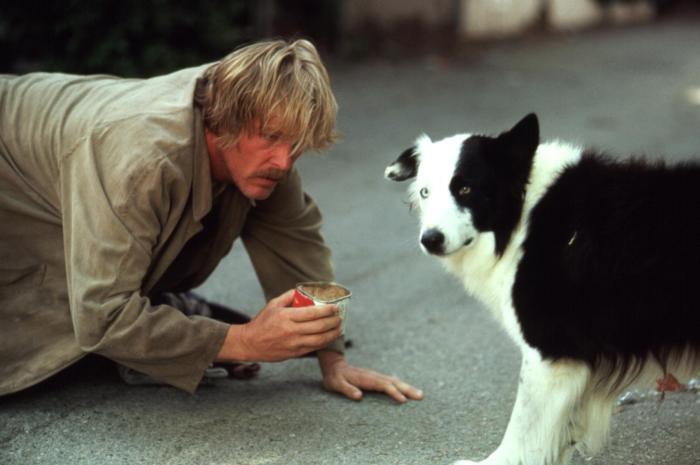
But my favorite Mazursky film is the 1986 comedy Down and Out in Beverly Hills. Mazursky directed and co-adapted the screenplay. Richard Dreyfuss and Bette Midler play a rich and very unfulfilled couple. Through circumstance, they invite a homeless guy (Nick Nolte) to stay in their Beverly Hills mansion. This fish-out-of-water exposes the shallowness of their lifestyle, and he personally touches – and awakens – each member of the household. And there are PLENTY of LOL moments. It’s a 28-year-old movie that stands up very well today. Watch for the fine actress Elizabeth Pena as Carmen the maid in her first highly visible role. Down and Out in Beverly Hills is available streaming on Netflix Instant, iTunes, Amazon and Vudu.
My friend Steve also loves Mazursky’s most overlooked film, Moon Over Parador, in which Dreyfuss plays a down-on-his-luck actor who gets trapped into impersonating a dead Latin American dictator. It’s very funny. Moon Over Parador is available on DVD from Netflix and streaming from Amazon, iTunes, Vudu and Xbox Video.
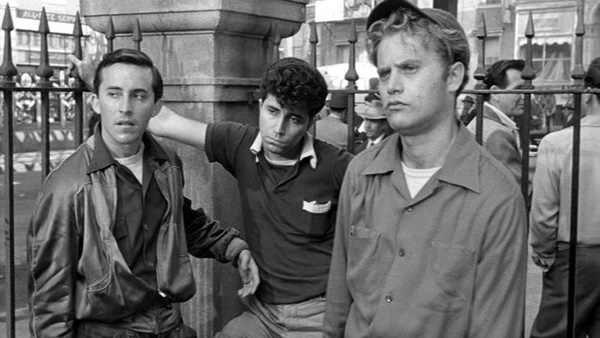
Tidbit: Although his major contribution was as a director, Mazursky started out as an actor, amassing 76 screen credits through 2011. In one of his first roles, he played a hard case teen in the troubled urban school saga Blackboard Jungle.
Paul Mazursky (left), some other guy and Vic Morrow in BLACKBOARD JUNGLE
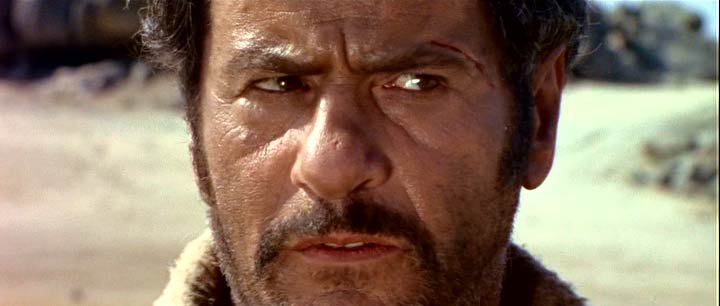
The actor Eli Wallach has died at age 98. He was a star of the New York stage and of NYC-based TV series and live television dramas of the 1950s. Wallach was a great movie character actor who had the gift of packing maximum entertainment value into any role. Movie fans will probably best remember him for two bandito bad guys – Cavela in The Magnificent Seven and Tuco in The Good, the Bad and the Ugly.
Wallach had 167 screen credits – he was in Polanski’s The Ghost Writer just four years ago. I hope we don’t overlook his feature film debut in 1956, Elia Kazan’s
comedy of seduction Baby Doll. Wallach plays a cotton gin owner who knows – and is trying to prove – that his gin has been burnt down by his rival (Karl Malden). Getting even involves the seduction of Malden’s dim, oversexed and luscious young wife (Carroll Baker). In this scene, watch Wallach pour on the charm while his eyes reveal predatory horniness. I love it when Baker exclaims, “Mr. Vacaro – this conversation is certainly taking a personal turn!”.
Ruby Dee, who died this week at age 91, was a great actress of film and stage, as well as the artistic and political partner of her husband Ossie Davis. One of her most affecting scenes is “Gator’s Last Dance” in Spike Lee’s Jungle Fever. Samuel L. Jackson (in the breakthrough performance that set up Jackson for his star-making turn in Pulp Fiction) plays a crackhead. Badly strung out, he bursts into the home of his parents (Dee and Davis) looking for some dope money. At first look, Dee seems to have less of a role in the scene than Jackson or Davis. But the key is her intense desperation to avoid – and then to mitigate – the encounter between son and father. And, finally, her fears are realized and manifest into profound grief. It’s a searing performance (and it’s worth sitting through the advertisement).
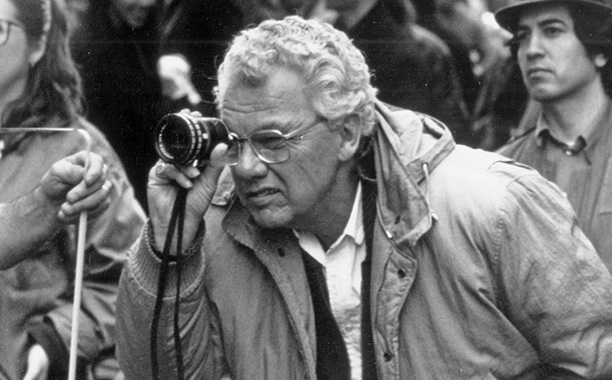
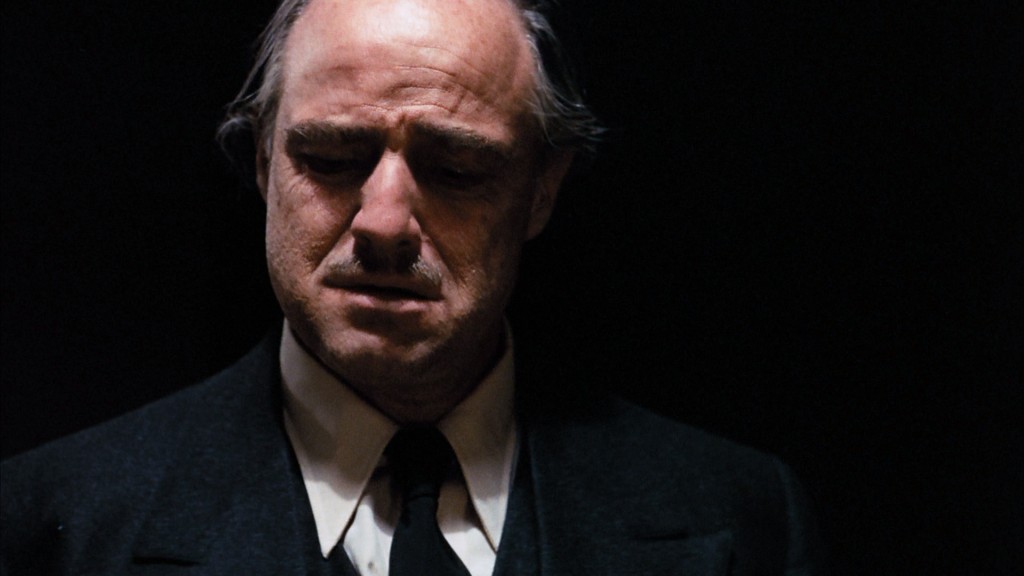
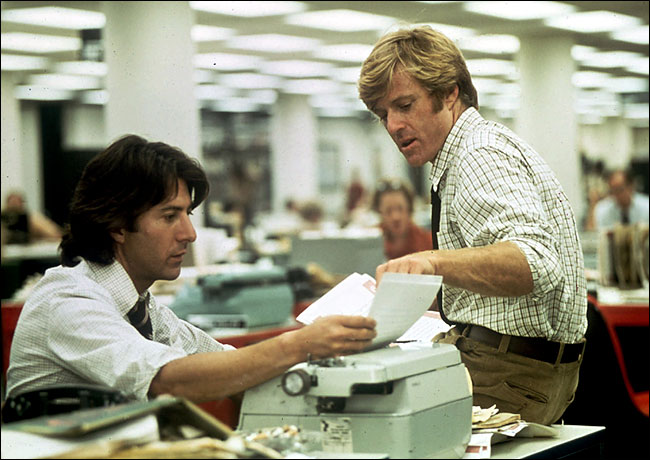
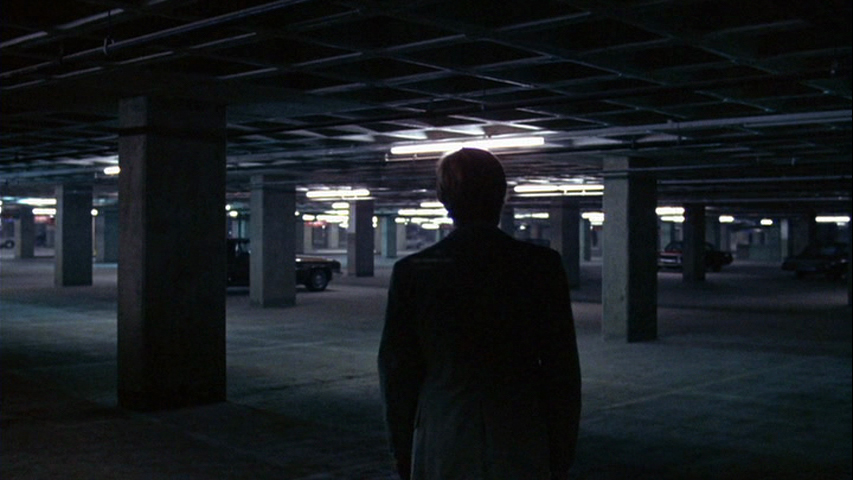
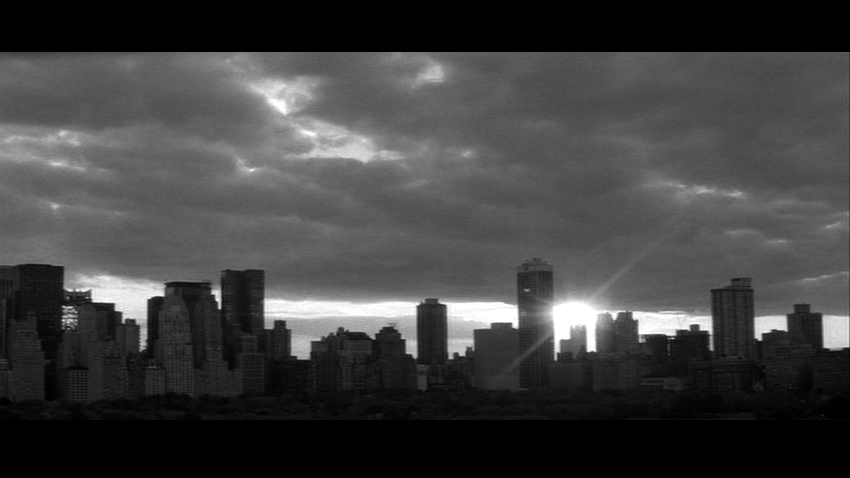
The cinematographer Gordon Willis has died at age 82. Willis was a particularly singular filmmaker who often broke new ground and often made movies that looked much different from movies made before. Although three of the films he shot won the Best Picture Oscar, he was unrecognized by the Academy Awards until he received an honorary Oscar in 2009.
To understand the impact a cinematographer can have on a movie, just check out these examples from among Willis’ 34 feature films. The first is The Godfather, for which he received the nickname “The Prince of Darkness”. (Willis shot all three Godfather films). The convention of the time held that a filmmaker always had to show the eyes of the movie star. Willis argued that, by not showing Marlon Brando’s eyes, you could actually see into his character’s soul.
The second example is All the President’s Men, a paranoid thriller enhanced by the contrast between the stark brightness of the Washington Post newsroom and the menacing darkness of the parking garage where Bob Woodward met his secret source Deep Throat.
And, finally, there’s Woody Allen’s 1979 masterpiece Manhattan. Why make a black and white movie in 1979? New York City was never a more stirring backdrop.
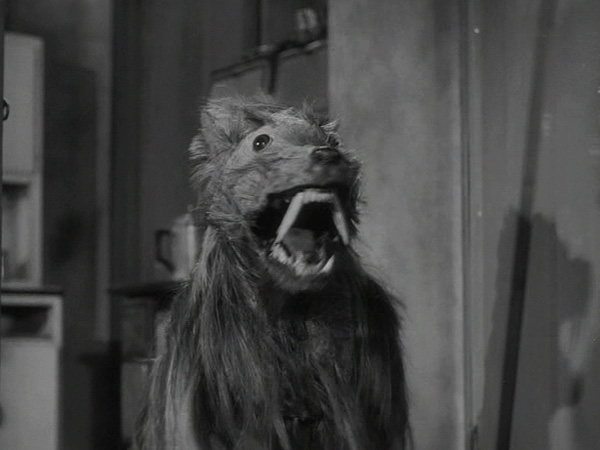
In honor of Godzilla, here’s my list of Least Convincing Movie Monsters. Note that Godzilla himself (even in the original 1954 Gojira) is too realistic to make my top ten. Enjoy.
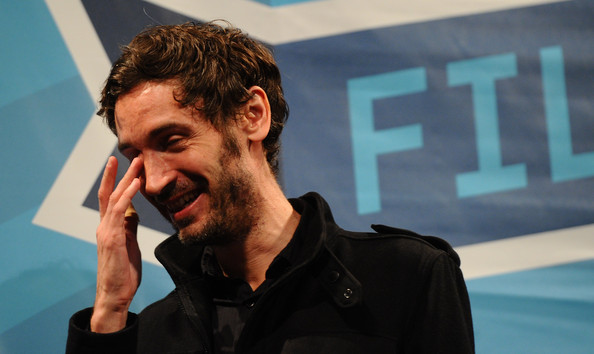
The Swedish filmmaker Malik Bendjelloul has died suddenly at age 36. He won the Best Documentary Oscar with his FIRST FEATURE – the powerful Searching for Sugar Man. Judging from Sugar Man, this is a significant loss to future cinema. At least we can still watch his one riveting and flabbergasting story – available on DVD from Netflix and Redbox and streaming from Amazon, iTunes, Vudu, YouTube and Xbox Video.