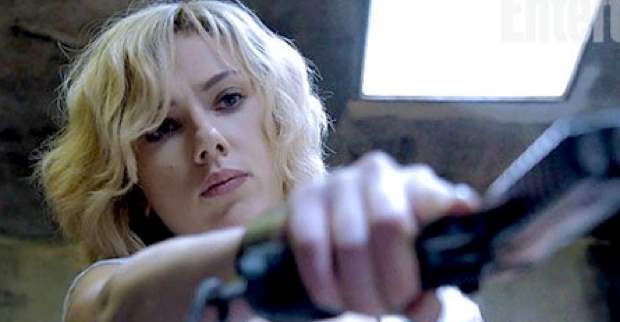
Supposedly we only use 10-20% of our brain capacity, and in the sci fi thriller Lucy, Scarlett Johannson gets to show what it would look like if we could harness 100% of our intelligence. Johannson plays the title character, who is captured by an especially merciless Chinese crime lord and then get dosed with a designer drug that unharnesses her full brainpower. Processing more information much faster than everyone else is a superpower that allows her to wreak mayhem upon the bad guys. She’s in a race against time to find and snag the rest of the world’s supply of the drug and to download what’s she’s learned to a brainiac scientist (Morgan Freeman) before she implodes. Kind of a sci fi D.O.A.
French director Luc Besson is an unapologetic lover of American action films. He really does excel at action, notably in the underrated parkour film District B13. He has also delivered kickass female characters in Leon: The Professional (Natalie Portman’s breakout role) and La Femme Nikita.
Fortunately, Besson has Scarlett Johannson’s magnetic screen presence at his disposal. Here, she gets to show off an amazing intensity that comes when her character’s superbrain is whirring away. Her throaty voice turns out to be perfect for delivering very authoritative statements. Of course, she looks great in a t-shirt (first half of movie) and a little black dress (second half). She doesn’t take herself too seriously and clearly has fun with these roles where she is kicking some serious ass.
Not too deep and with great eye candy visuals, Lucy is pedal-to-the-medal summer fun.
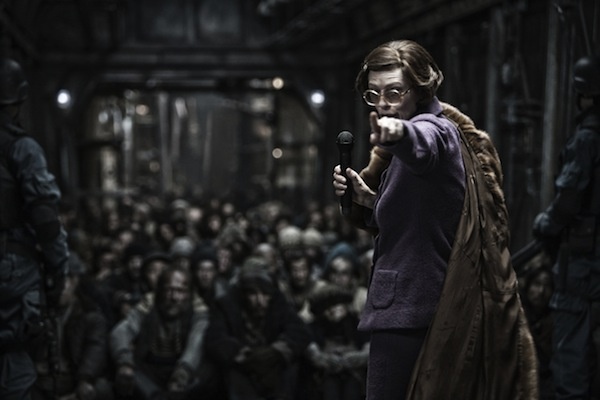
Snowpiercer is that rare sci fi thriller that effectively explores some serious questions without becoming ponderous or pretentious. Here’s the setup. In an attempt to fix global warming by chemically cooling the earth, mankind has moved the needle too far and has instead FROZEN the planet. The only survivors are a few thousand humans packed into a nuclear-powered, “self-sustainable” train that rattles around the earth on a circuitous track. The wealthy elite lives in comfort at the front of the train, while their cruel armed guards keep the wretched, unwashed poor in the back of the train. Naturally, the poor revolt and assault the front of the train.
So we have a conflict in a claustrophobic space, and the thrills come from how the poor think and fight their way up car-by-car. Because the train’s systems have been engineered to prevent this, it takes a lot of ingenuity. And it takes a lot of violence, too, and because the elite has almost run out of bullets repressing previous revolts, that violence is often of the medieval hacking-and-thumping sort.
The train in Snowpiercer, of course, is an allegory for a society with an extreme disparity of wealth – and it’s not far removed from similar societies in human history and even today. In Snowpiercer’s most pointed moments, the mouthpiece for the elite continually tells the poor that they are undeserving and lucky to get the morsels that they are allowed. But the more challenging question – and one that Snowpiercer leaves the audience to ponder – is what are the limits of order; naturally, we’re all against repression, but how about when the very survival of the species is up for grabs?
The production design of Snowpiercer is exceptional. The snowy planet is cool, but the best part of Snowpiercer is experiencing each part of the train, including the greenhouse car, the aquarium car, and (my favorite) the disco car. The imagination that went into creating a mobile space that must sustain itself with making its own food, treating its own water, educating its own kids, etc., is remarkable (and Oscar-worthy).
As the stonefaced leader of the uprising, Chris Evans is okay but doesn’t get to do much. That’s too bad, because I know he can act from his quirky role in The Iceman as hitman Mr. Freezy, who works out of his ice cream truck. Because I don’t watch superhero movies, I was unaware that Evans has recently starred as Captain America in The Avengers and as Johnny Storm in the Fantastic Four movies.
The best performance comes from Kang-ho Song as Snowpiercer’s most interesting character, a high-tech locksmith addicted, along with his 17-year-old daughter, to a drug of the future. Tilda Swinton is gloriously outrageous as a loathsome middle manager for the evil elite. After a spate of emo dramas, Octavia Spencer gets to swing her axe through a herd of bad guys. And Ed Harris, John Hurt and Alison Pill are all reliably good too.
I’m a big fan of Korean writer/director Joon-ho Bong, who made the brilliant 2003 detectives-hunting-serial killer movie Memories of a Murder (also with Kang-ho Song) and the 2009 drama Mother, which made my yearly Best Of list. Memories of a Murder is available on DVD from Netflix, and you can find Mother on DVD from Netflix and streaming on iTunes, Vudu and Xbox Video. He also co-wrote the upcoming on-the-seas thriller Sea Fog (Haemoo) which plays at the Toronto International Film Fest this fall.
You can also stream Snowpiercer on Amazon, iTunes, Vudu, YouTube, Google Play, Xbox Video and DirecTV.
My DVD/Stream of the week – perfect for binge-viewing on the holiday weekend – is the eight one-hour episodes of HBO’s True Detective. It’s a dark tale of two mismatched detectives – each tormented by his own demons – obsessed by a whodunit in contemporary back bayou Lousiana. Woody Harrelson is very good – but Matthew McConaughey’s performance may have been the best on TV this year.
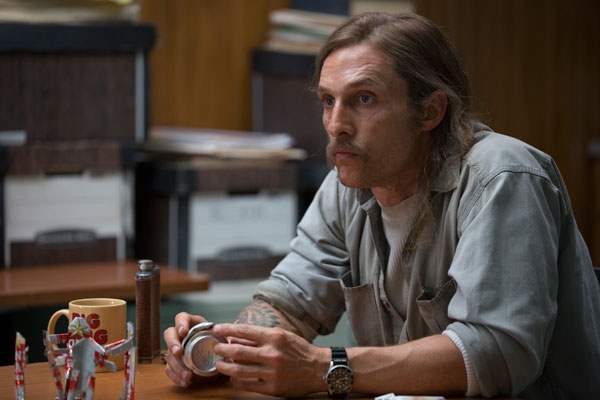
The two detectives are shown pursuing a case together in 1995 and then being interviewed separately about it in 2012. In the 2012 scenes, McConaughey sits at a table, his eyes dead but occasionally flashing, behind a coffee mug and an increasing lineup of empty beer cans. He chain smokes and stares down his interrogators – doing very little with frightening intensity. McConaughey has recently delivered brilliant performances in excellent movies (Mud, Bernie, The Paperboy, Killer Joe, The Wolf of Wall Street, Dallas Buyers Club) – and this may be his best. McConaughey is reason enough to watch True Detective.
True Detective is available on DVD from Netflix and streaming from HBO GO.
The thriller Lockeis about an extremely responsible guy (Tom Hardy) who has made one mistake – and he’s trying to make it right. But trying to do the responsible thing in one part of your life can have uncomfortable consequences in the others. The title character drives all night trying to keep aspects of his life from crashing and burning.
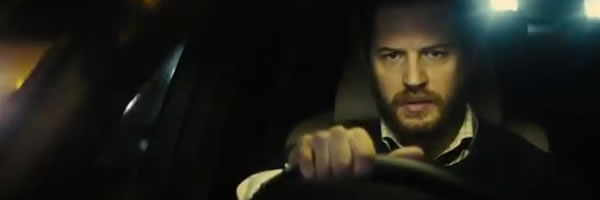
In fact, he never leaves the car and, for the entire duration of the movie, we only see his upper body, his eyes in the rearview mirror, the dashboard and the roadway lit by his headlights. All the other characters are voiced – he talks to them on the Bluetooth device in his BMW. Sure, that’s a gimmick – but it works because it complements the core story about the consequences of responsibility.
Locke is written and directed by Steven Knight (Dirty Pretty Things, Eastern Promises). The story is actually a domestic drama – there are no explosions to dodge, no one in peril to rescue and no bad guys to dispatch. But it’s definitely a thriller because we care about whether Locke meets the two deadlines he will face early the next morning.
It’s a masterful job of film editing by Justine Wright (Touching the Void, The Last King of Scotland). After all, her cuts help keep us on the edge of our seats, despite her working with a very finite variety of shots (Locke’s eyes, the dashboard, etc.).
Hardy, who’s known as an action star, is excellent at portraying this guy who must try to keep his family, biggest career project and self-respect from unraveling at the same time, only armed with his ability to persuade others. It’s a fine film.
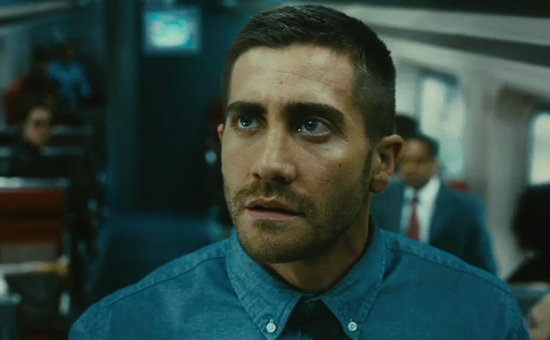
Source Code is a gripping thriller, and I admired both its intelligence and its heart. The key is a breakthrough screenplay by Ben Ripley. The scifi premise is that supersoldier Jake Gyllenhaal can inhabit the brain of a terrorism victim for the same 8 minutes – over and over again. Each time, he has 8 minutes to seek more clues. Can he build the clues into a solution and prevent the terrorist atrocity? Gyllenhaal is excellent. So is Vera Farmiga as his handler and Michelle Monaghan as a girl you could fall in love with in 8 minutes. Jeffrey Wright chews the scenery with his homage to Peter Sellers in Dr. Strangelove. Director Duncan Jones solidly brings Ripley’s screenplay home.
It’s on my list of Best Movies of 2011. Source Code is available on DVDD from Netflix and streaming from Amazon, iTunes, Vudu and Xbox Video.
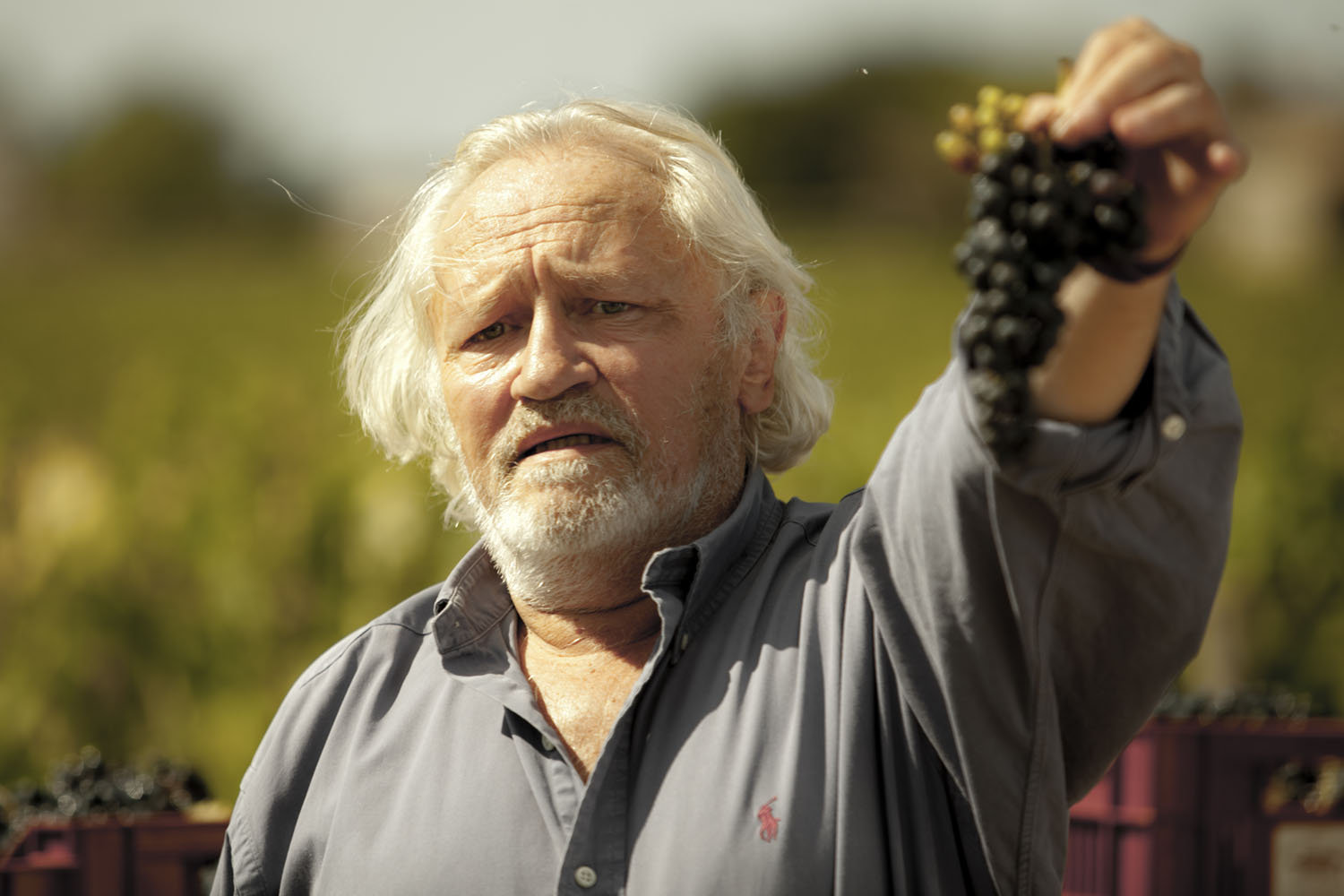
Niels Arestrup (A Prophet, War Horse) stars as the owner of French wine estate who places impossible expectations on his son, with lethal results. The poor son has gotten a degree in winemaking, has worked his ass off on his father’s estate for years and has even married well – but it’s just not enough for his old man. The father’s interactions with the son range from dismissive to deeply cruel.
The father’s best friend is his longtime estate manager, whose health is faltering. The son is the natural choice for a successor, but the owner openly prefers the son’s boyhood friend, the son of the manager. The first half of You Will Be My Son focuses on the estate owner’s nastiness toward his son, which smolders throughout the film. But then the relationship between the sons turns from old buddies to that of the usurper and the usurped. And, finally, things come down to the decades-long relationship between the two old men.
Deep into the movie, we learn something about the father that colors his view of his son. And then, there’s a startling development that makes for a thrilling and operatic ending.
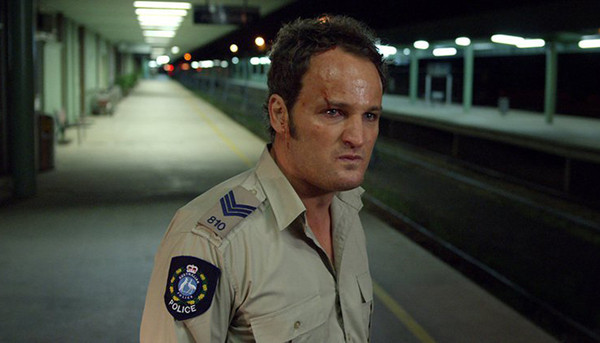
In the Australian thriller Swerve, a Good Samaritan drifter gets caught up in a deadly entanglement involving a briefcase full of drug money, some very dangerous guys and a sexy woman of uncertain loyalty. The movie gets its title from some key moments when vehicles swerve and move the plot along. There’s a lot of convincing action (there not even any dialogue for the first seven minutes and two fatalities), but writer-director Craig Lahiff is a better director than a writer. If you’ve seen a femme fatale and some action thrillers, nothing in the plot will surprise you. Unfortunately, the wife with wandering thighs is played by Emma Booth, who is unable to elevate the Bad Girl to Kathleen Turner/Lana Turner territory.
The best thing about Swerve is that hulking Jason Clarke (Animal Kingdom, Zero Dark Thirty, Lawless) is really good at playing menace and indestructibility, and here he adds a mad glint in his eyes. Plus there some pleasingly absurd touches with marching bands randomly wandering into otherwise tense scenes. Bottom line: Swerve is one hour forty minutes of unsurprising and predictable action peppered with one fun performance.
Swerve is available on DVD from Netflix and streaming from Amazon, iTunes and Vudu.
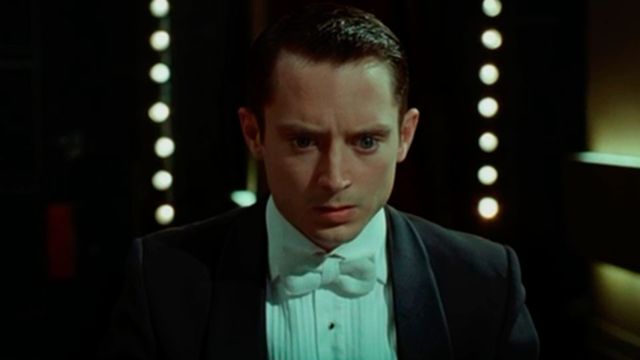
Expressly Hitchcockian in style, Grand Piano is a wannabe thriller that unfortunately falls short. Elijah Wood plays a superstar concert pianist who has spent five years in seclusion after melting down from stage fright. As he sits at the piano for his big comeback concert, he receives a threat: if he misplays even one note, either he or his wife will be immediately killed. Already a bundle of nerves, he must navigate his way through the performance while trying to find his tormentor.
What Grand Piano has going for it is Elijah Wood. Who else would you cast for wide-eyed terror (or wide-eyed anything for that matter)? But the plot is just too contrived to engage us. So the manipulative suspense is there, but, ultimately, not the thrills.
The Chinese thriller Parallel Mazetries to be Psycho with parallel universes thrown in. Unhappily, it is a shoddy and incoherent film. Here’s how you could end up with Parallel Maze: show an eighth grader Upstream Color, hand him a digital camera along with 200 bucks and tell him, “Make THAT”.
Ed Wood is alive, and he is Chinese. Parallel Maze employs – from time to time and for seemingly no reason – every conceivable film effect: shaky cam, jump cuts, split screen even animation. It’s all just kinda thrown up there. And in the Psycho like shower scene, you can tell right away which character is the slasher, which fatally dilutes the impact.
It’s clear that the filmmakers are movie lovers – besides a movie-within-the-movie and the explicit homage to Psycho, there are references to movies from Love Story to The Treasure of the Sierra Madre. The parallel threads of the story’s structure and the movie references were a promising start, but the low production values and random filmmaking techniques are just too distracting.
I saw Parallel Maze at its world premiere at Cinequest.
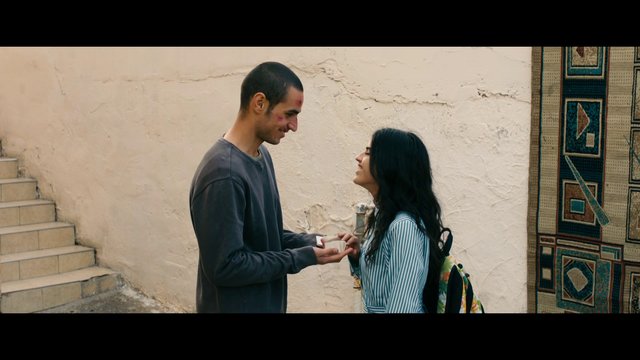
The gripping and thought-provoking Palestinian drama Omar, which opens tomorrow, is a fundamentally a love story that drives an action thriller. It seems to be about a college-age Palestinian guy named Omar and his two buddies. They live in a West Bank Arab community that is repressed by apparently omniscient and omnipotent Israeli security forces. It’s an environment where one bad choice can spiral one’s life completely out of control – and one that is toxic with betrayals.
There are thrills aplenty when the Israeli security teams are chasing our hero. We’ve never seen more riveting chase scenes through the alleys and rooftops of West Bank cities. Shot in Nazareth and Nablus, Omar gives us a novel look at these Arab communities and the Israeli security wall.
But it is basically a love story, albeit a heartbreaking one, because most of the plot is motivated by Omar’s love for his sweetheart Nadia. The first action by the three young guys stems from politics, testosterone and the foolhardiness of youth. But everything that happens after is because of Omar’s yearning for Nadia. We also see the chaste Palestinian courtship rituals; the kids are burning with passion for each other as they exchange letters and discreet glances.
Omar is not for everyone. For one thing, it doesn’t try to be even-handed about the Israeli Occupation – everything is seen through the Palestinian lens. It’s realistic – one Israeli character in particular is humanized and it’s easy for the audience to disapprove of the boneheaded behavior by the young Palestinians. But if you aren’t open to that Palestinian perspective, you’re not going to like this movie. And the ending is unusually jarring – my fellow audience members sat in shocked silence for a few seconds.
Omar won a jury prize at Cannes and is nominated for this year’s Best Foreign Language Oscar.