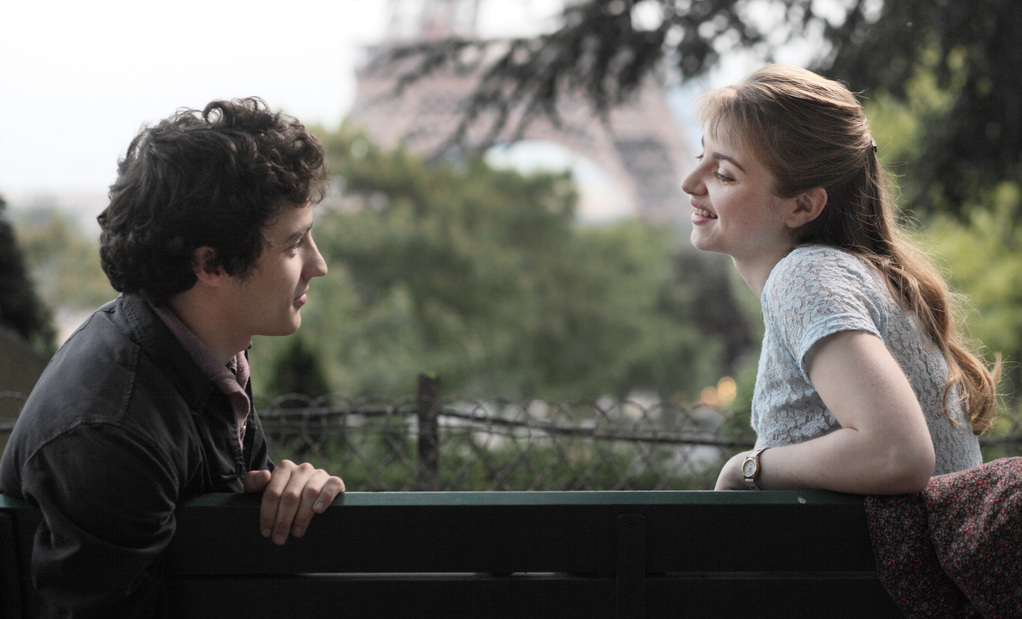
The first love depicted in Arnaud Desplechin’s coming of age film My Golden Daysis completely evocative. That first love is inevitable even if the young lovers don’t know it yet, and then filled with passion, importance, obsession, angst, conflict, breakups and makeups. And then it runs its course.
The performance of Lou Roy-Lecollinet as the unpredictable object of the young protagonist’s affection really elevates My Golden Days. Roy-Lecollinet has looks which won’t attract every guy, but would be irresistible to some. She’s able to convincingly play a girl with a devastating combination of confidence, forthrightness, charm, wit, impulsivity and a wandering eye.
That story makes up the core of My Golden Days, a flashback bookended by the contemporary, middle-aged version of the protagonist (Mathieu Amalric). The story of young romance is perfect – one that we can all recognize. But, in the epilogue, the Amalric character (who has lived a full and eventful life in the 15-20 years since) is oddly still fervently bitter about what happened years before; with that distance, most of us would look back with nostalgia or, at least, a wistful acknowledgement of lessons learned. I was a bit put off.
And what’s with the lame title My Golden Days, which makes this sound like the story set in a retirement home? The original title is Trois souvenirs de ma jeunesse which I think translates into Three Memories of My Youth – that would be better and there’s gotta be plenty of more appealing and descriptive titles.
My Golden Days, which I saw at Cinequest, is a movie that anyone who is decades removed from first love should see.
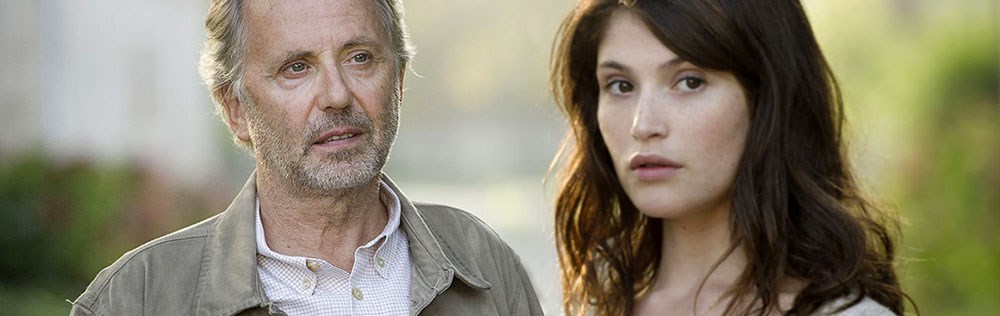
Fabrice Luchini and Gemma Arterton in GEMMA BOVERY
In honor of Cinequest, here’s a highlight from last year’s fest. In the delightful dark comedy Gemma Bovery, Fabrice Luchini plays a guy who has left his Type A job in Paris to take over his father’s bakery in a sleepy village in Normandy. He gets new neighbors when a young British couple named Bovery moves in. The young British woman (played by the delectable Gemma Arterton) is named Gemma Bovery, and only the baker notices the similarity to Emma Bovary. But, like the protagonist of Madame Bovary, the young British woman is also married to a Charles, becomes bored and restless and develops a wandering eye. The baker rapidly becomes obsessed with the Flaubert novel being re-enacted before his eyes and soon jumps into the plot himself. Gemma Bovery, which I saw at Cinequest 2015, is a French movie that is mostly in English.
Fabrice Luchini is a treasure of world cinema. No screen actor can deliver a funnier reaction than Luchini, and he’s the master of squeezing laughs out of an awkward moment. For me, his signature role is in the 2004 French Intimate Strangers, in which he plays a tax lawyer with a practice in a Parisian professional office building. A beautiful woman (Sandrine Bonnaire), mistakes Luchini’s office for that of her new shrink, plops herself down and, before he can interrupt, starts unloading her sexual issues. It quickly becomes awkward for him to tell her of the error, and he’s completely entranced with her revelations, so he keeps impersonating her shrink. As they move from appointment to appointment, their relationship takes some unusual twists. It’s a very funny movie, and a great performance.
Gemma Bovery is directed and co-written by Anne Fontaine (The Girl from Monaco, Coco Before Chanel). Fontaine has a taste for offbeat takes on female sexuality, which she aired in the very trashy Adore (Naomi Watts and Robin Wright as Australian cougars who take on each other’s sons as lovers) and the much better Nathalie (wife pays prostitute to seduce her cheating hubby and report back on the details).
Gemma Bovery isn’t as Out There as Nathalie, but it’s just as good. The absurdity of the coincidences in Gemma Bovery makes for a funny situation, which Luchini elevates into a very funny movie. Gemma Bovery is available to stream from Amazon Video (free with Amazon Prime), iTunes, Vudu, YouTube and Google Play.
The French drama In the Name of My Daughteruses three characters to probe the themes of obsession and betrayal – and all in a “based-on-facts” story. The ever-glorious Catherine Deneuve plays a dominant and proud casino owner, even desperately proud. Her adult daughter (Adèle Haenel) is a handful but is now vulnerable on the rebound. Her lawyer/fixer (Guillaume Canet) is ambitious and manipulative, and he believes that his smarts entitle him to rise above his station. Everyone FEELS betrayed and that brings on real betrayal.
Astonishingly, In the Name of My Daughter is based on a notorious true story. The end of the story becomes a courtroom procedural.
There’s plenty of eye candy in In the Name of My Daughter, particularly a thrilling motorcycle ride through gorgeous countryside and the casino town set on the Riviera.
The leads are very good, and so is the supporting cast, especially Mercier Guerin and Mauro Conte. There are sex scenes, but the sexiest moment is a fully clothed African dance performed by Haenel. And there’s a wonderful French version of Under the Boardwalk.
In the Name of My Daughter is available to stream from iTunes, Vudu, YouTube and Google Play.
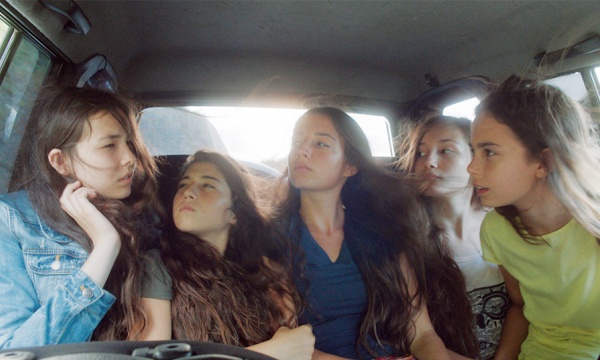
Mustangis about five exuberant Turkish teenage girls who challenge the repression of traditional culture. It’s a triumph for writer-director Deniz Gamze Ergüven, and one of the best films of the year.
The five parentless sisters are living with their uncle and aunt on the Turkish coast “a thousand kilometers from Istanbul”. They’re a high-spirited bunch, and their rowdiness – innocent by Western standards – embarrasses their uncle. Overreacting, he tries to protect the family honor by pulling them out of school, taking away their electronics, putting them in traditional dresses (evoking the dress wear of fundamentalist polygamist Mormons) and conniving to marry them off as soon as possible. The uncle turns their home into a metaphorical prison that becomes more and more literal. The girls push back, and the stakes of the struggle get very, very high.
Our viewpoint is that of youngest sister Lale (Günes Sensoy), who is a force of nature, ever watchful (often fiercely). The poster girl for indomitability, Lale is one of the great movie characters of 2015.
Mustang is a film of distilled feminism, without any first world political correctness. These are people who want to marry or not, who they want, when they want and to have some control over their lives. They want protection from abuse. That is not a high bar, but because they are female, the traditional culture keeps these basic rights from them.
Although Mustang is set and filmed in Turkey by a Turkish writer-director, the actors are Turkish and all the dialogue is Turkish, it is technically a French movie. Director Ergüven works in France and the film was financed and produced in France. In fact, it is France’s official entry for the Best Foreign Language Picture Oscar (over the Cannes winner Dheepan and the Vincent Lindon drama The Measure of a Man).
I happened to be in Sevilla, Spain for the first weekend of the Sevilla European Film Festival and saw Mustang there. I’ll be rooting for Mustang to win an Oscar.
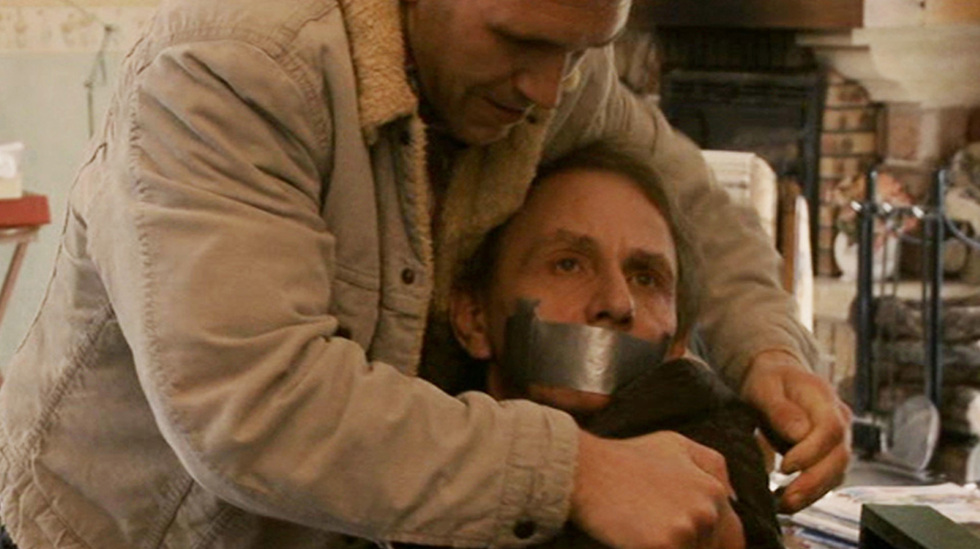
When Michel Houellebecq, one of the most well-known writers in France, disappeared for a few weeks recently, there were media rumors that he had been kidnapped. The Kidnapping of Michel Houellebecq is an absurdist mockudrama in which Houellebecq himself plays himself in an imagined kidnapping. Once Houellebecq’s captors hide him in a farmhouse, the interactions between the characters become very funny.
The humor is all very droll and stems from the characters’ reactions to what Houellebecq finds to be an absurd situation. He is kept in the frilly room of a little girl, complete with large doll. And we see one of France’s leading public intellectuals and his less gifted captors fully engaged in existential discussions on topics such as “Does Poland exist?”.
Unfortunately, The Kidnapping of Michel Houellebecq opens with an almost intolerably slow segment BEFORE he is kidnapped. In fact, the pace of the entire film is pretty slow, so The Kidnapping of Michel Houellebecq is not for everyone.
But if you fast forward over the beginning and settle into observing the writer and his motley crew of kidnappers, you’ll find some laughs. The Kidnapping of Michel Houellebecq is available streaming on Netflix Instant, Amazon Instant Video, iTunes, Vudu, YouTube and Google Play.
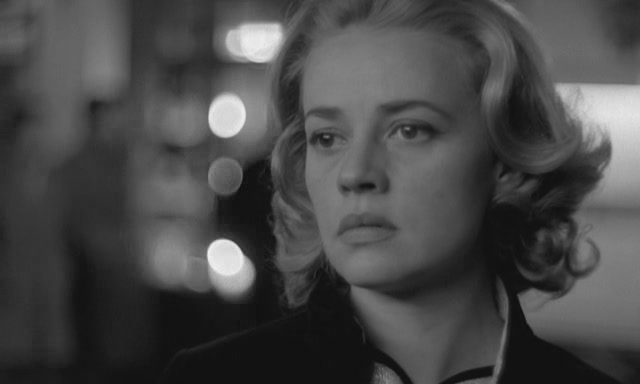
Tomorrow night, July 24, Turner Classic Movies presents the groundbreaking French noirElevator to the Gallows. It’s one of my Overlooked Noir.
Elevator to the Gallows (1958) is such a groundbreaking film, you can argue that it’s the first of the neo-noir. It’s the debut of director Louis Malle, shot when he was only 24 years old. It’s difficult now to appreciate the originality of Elevator the Gallows; but in 1958, no one had seen a film with a Miles Davis soundtrack or one where the two romantic leads were never on-screen together.
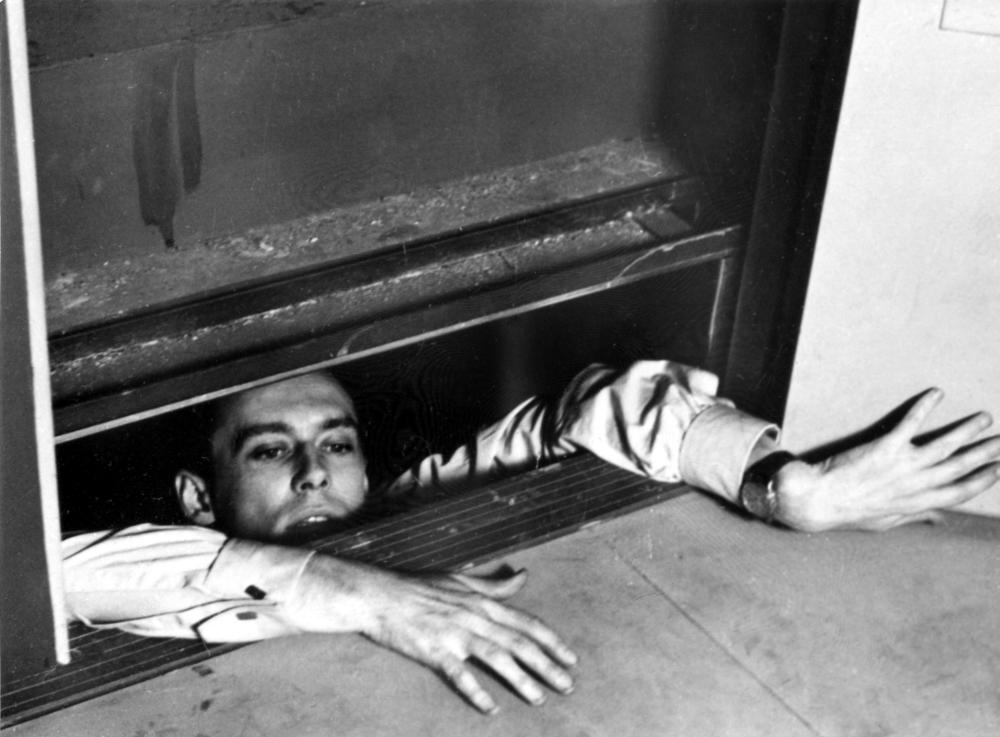
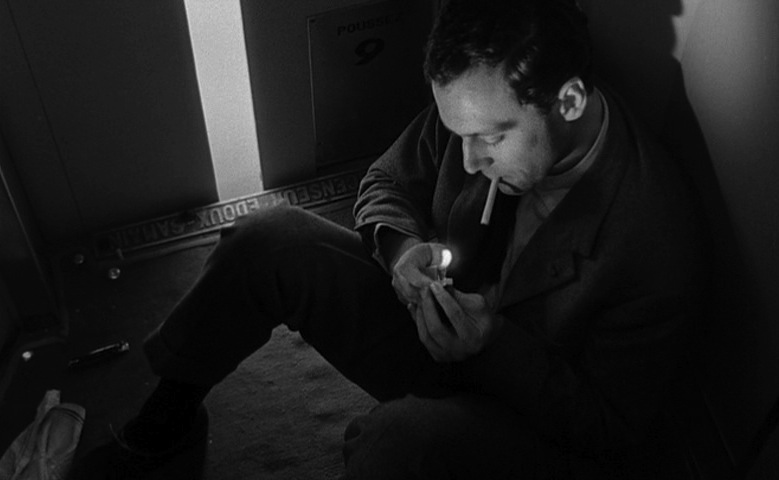
A thriller that still stands up today, Elevator to the Gallows (Ascenseur pour l’échafaud) is about the perfect crime that goes awry. The French war hero Julien (Marcel Ronet), is now working as an executive for a military supplier. He’s having an affair with Florence (Jeanne Moreau), whose husband owns the firm. Seeking to possess both his lover and his company, Julien implements an elaborately detailed plan to get away with his boss’ murder. Everything goes perfectly until he makes one oversight; then the dominoes begin to fall, and soon he is trapped in a very vulnerable situation. He is incommunicado, and he remains ignorant of the related events that transpire outside.
Almost every character makes false assumptions about what is going on. Florence mistakenly believes that Julien has run off with a young trollop. A young punk and his peppy girlfriend incorrectly assume that they are on the verge of arrest. The police pin a murder on Julien that he didn’t commit – but his alibi is the murder that he DID commit. And there’s a great scene where Julien is striding confidently into a busy cafe, unaware that he has become the most recognizable fugitive in France.
It’s a page-turner of a plot, and the acting is superb, but Malle’s choices make this film. When Florence thinks that she’s been dumped, she walks through Paris after dark. Jeanne Moreau doesn’t have any lines (although her interior thoughts are spoken in voice-over). Instead, she embodies sadness and shock through her eyes and her carriage – the effect is heartbreaking. Mile Davis’ trumpet reinforces the sadness of her midnight stroll.
The Miles Davis score is brilliant, but Malle often makes effective use of near silence, too. And he reinforces the kids’ shallowness and over-dramatizing with strings. Every audio choice is perfect.
There’s vivid verisimilitude in a Paris police station at 5 am – all grittiness with drunks sobering up, and the holding cage filled with thieves and prostitutes. The contrast in how the police treat the wealthy and influential is stark and realistic.
The young couple is completely believable. The joyride is absolutely what these characters would do. The young guy is sullen and the girl is hooked on his moodiness. And, of course, with the self-absorption of youth, they over-dramatize their own situation.
Every scene in Elevator to the Gallows is strong, but the scenes with Moreau pop off the screen. This was her star-making role, and perhaps the definitive Jeanne Moreau role (yes – even more than Jules et Jim).
Marcel Ronet is also excellent as Julien. Julien is a guy with serious skills, and the confidence and poise to use them. When Julien is trapped in the situation that would cause most of us to freak out, he immediately starts working on an Apollo 13-like solution without any hint of panic. The harrowing scenes of Julien’s entrapment and escape fit alongside the mot suspenseful moments in the great French crime thrillers Rififi (1955) and Le trou (1960). The means of his eventual escape is one of the most ironic moments in cinema.
Marcel Ronet in ELEVATOR TO THE GALLOWS
Eventually we see the marvelous Lino Ventura as the detective captain. A former European wrestling champion, Ventura had debuted five years earlier in the great Touchez pas au grisbi and had followed that with several gangster/cop supporting roles. Immediately after Elevator to the Gallows, Ventura started getting lead roles. Ventura had an almost unique combination of charm, wit and hulking physicality; he’s one of the few actors I can envision playing Tony Soprano.
The high contrast black and white photography, the voiceovers and the city at night all scream “noir”. So does the amorality of the main characters seeking to get what they want by murder, the ironies of the miscommunications and mistaken assumptions and the profoundly cynical ending.
But the look and sound of Elevator to the Gallows is entirely new. The experience of viewing Elevator to the Gallows seems closer to the American indie triumphs of the early 1970s (The Godfather, Chinatown, The Conversation) than to the likes of The Postman Always Rings Twice or The Big Sleep. Elevator to the Gallows remains a starkly modern film that is still as fresh today as in 1958.
Fabrice Luchini and Gemma Arterton in GEMMA BOVERY
In the delightful dark comedy Gemma Bovery, Fabrice Luchini plays a guy who has left his Type A job in Paris to take over his father’s bakery in a sleepy village in Normandy. He gets new neighbors when a young British couple named Bovery moves in. The young British woman (played by the delectable Gemma Arterton) is named Gemma Bovery, and only the baker notices the similarity to Emma Bovary. But, like the protagonist of Madame Bovary, the young British woman is also married to a Charles, becomes bored and restless and develops a wandering eye. The baker rapidly becomes obsessed with the Flaubert novel being re-enacted before his eyes and soon jumps into the plot himself. Gemma Bovery, which I saw at Cinequest 2015, is a French movie that is mostly in English.
Fabrice Luchini is a treasure of world cinema. No screen actor can deliver a funnier reaction than Luchini, and he’s the master of squeezing laughs out of an awkward moment. For me, his signature role is in the 2004 French Intimate Strangers, in which he plays a tax lawyer with a practice in a Parisian professional office building. A beautiful woman (Sandrine Bonnaire), mistakes Luchini’s office for that of her new shrink, plops herself down and, before he can interrupt, starts unloading her sexual issues. It quickly becomes awkward for him to tell her of the error, and he’s completely entranced with her revelations, so he keeps impersonating her shrink. As they move from appointment to appointment, their relationship takes some unusual twists. It’s a very funny movie, and a great performance.
Gemma Bovery is directed and co-written by Anne Fontaine (The Girl from Monaco, Coco Before Chanel). Fontaine has a taste for offbeat takes on female sexuality, which she aired in the very trashy Adore (Naomi Watts and Robin Wright as Australian cougars who take on each other’s sons as lovers) and the much better Nathalie (wife pays prostitute to seduce her cheating hubby and report back on the details).
Gemma Bovery isn’t as Out There as Nathalie, but it’s just as good. The absurdity of the coincidences in Gemma Bovery makes for a funny situation, which Luchini elevates into a very funny movie.
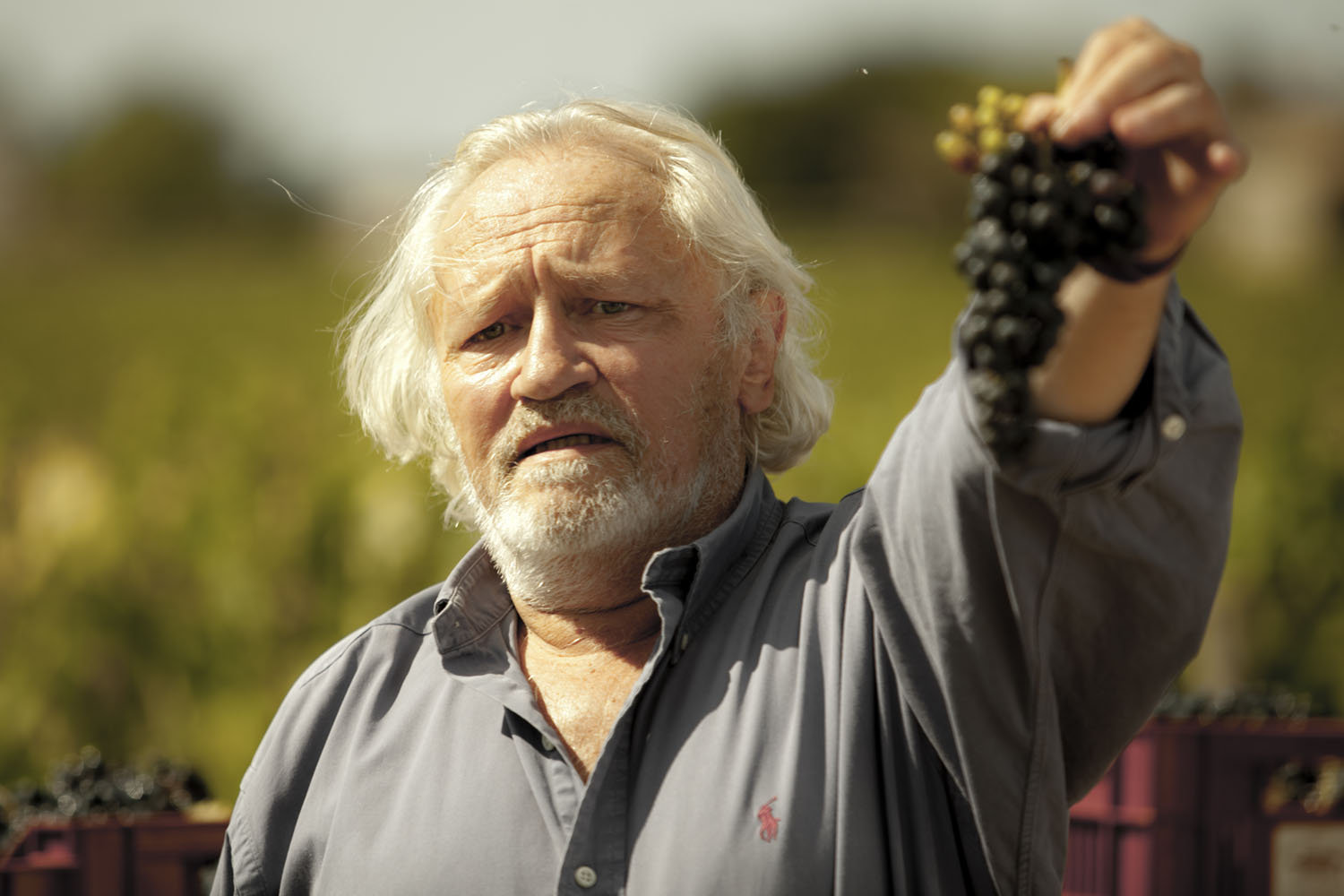
Niels Arestrup (A Prophet, War Horse) stars as the owner of French wine estate who places impossible expectations on his son, with lethal results. The poor son has gotten a degree in winemaking, has worked his ass off on his father’s estate for years and has even married well – but it’s just not enough for his old man. The father’s interactions with the son range from dismissive to deeply cruel.
The father’s best friend is his longtime estate manager, whose health is faltering. The son is the natural choice for a successor, but the owner openly prefers the son’s boyhood friend, the son of the manager. The first half of You Will Be My Son focuses on the estate owner’s nastiness toward his son, which smolders throughout the film. But then the relationship between the sons turns from old buddies to that of the usurper and the usurped. And, finally, things come down to the decades-long relationship between the two old men.
Deep into the movie, we learn something about the father that colors his view of his son. And then, there’s a startling development that makes for a thrilling and operatic ending.
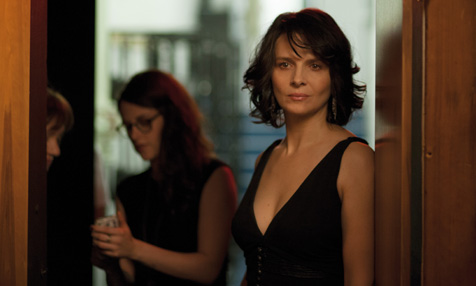
Man, what a disappointment! Somehow the Clouds of Sils Maria lets us lose interest in the ever-radiant Juliette Binoche and wastes a performance by Kristen Stewart that made her the first American actress to win a César (the French Oscar). But it’s just a muddled mess.
Binoche plays a Margot Channing-aged actress, and Stewart plays her personal assistant. The star is about to take the older woman role in a play that launched her career (in a younger role to be played by the star of a Hollywood comic book movie). As the movie begins, the play’s author dies and the Binoche character must deal with the loss of her mentor. She’s also going through a difficult divorce and fending off the advances of a onetime co-star, and generally being pretty difficult amid her midlife crisis. None of this interesting and some of the story is confusing to boot.
The only time that Clouds of Sils Maria perks up is when Chloë Grace Moretz shows up as the younger actress, a train wreck who is the epitome of paparazzi-bait . (Kudos to Kristen Stewart – the Moretz role is close enough to Stewart’s real life to demonstrate that Stewart doesn’t take herself too seriously.) It’s a funny role and Moretz nails it.
Oddly, Clouds of Sils Maria is almost entirely in English (for Kristen Stewart?), and Binoche just isn’t as enthralling as she usually is. It’s also odd that a French celebrity would hire a non-French speaking personal assistant for travel in French-speaking country – what’s up with this?
I blame director Olivier Assayas. I really liked Assayas’ miniseries Carlos , but he now has engineered three clunker features in a row (Summer Hours, Something in the Air and Clouds of Sils Maria)., so I’ll have to persuaded to see his next project.
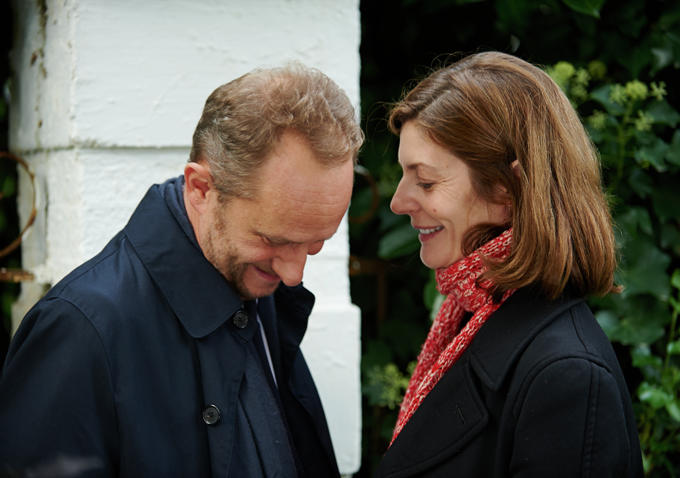
Benoît Poelvoorde and Chiara Mastroianni in THREE HEARTS
The Belgian romantic drama Three Hearts centers on the singular character of Marc, a Parisian tax auditor who has a fondness for the ladies – and they for him. He also is very conflict-averse and handles stress very badly, which has contributed to a sometimes disabling heart condition. On a business trip to a provincial town, Marc misses his train, and becomes romantically involved with a local woman. Because of circumstance, that relationship doesn’t move forward, which clears him to begin a relationship with a second woman in that town. Once he is irrevocably entangled, he learns that the two women are intimates.
In what I think is a really compelling performance, Marc is played by Benoît Poelvoorde. Marc finds himself trapped in an excruciating situation, and the only way out requires courage that he just doesn’t have. Poelvoorde is completely believable as a guy who chats up women, settles into domesticity and then is paralyzed by terror and dread. Plus, Poelvoorde has a gangly walk and often slips into outright goofiness, which effectively lightens the dramatic tension.
Now, some critics do not agree with me. Poelvoorde is not a conventionally good-looking guy. Ordinarily, you wouldn’t expect a guy like this to be able to attract a woman who looks like Chiara Mastroianni or Charlotte Gainsbourg. If you can’t jump this, you’re not gonna buy into the movie, but it worked for me. Marc does seem to one of those rugged guys who has a knack with the ladies, and the two woman characters are in windows of extreme vulnerability and are ripe to experiment outside their own relationships.
Charlotte Gainsbourg and Chiara Mastroianni are excellent as the two women. Their personalities are starkly different but they each have an immediate need that they hope Marc can fill. With the regal serenity that she can muster, Catherine Deneuve plays the character who intuits what is going on long before the others.
Three Hearts is directed and co-written by Benoit Jaquot, who recently gave us the lavishly staged and absorbing costume drama Farewell, My Queen.
One more thing – the potential for upcoming confrontation is signaled by Big Music – ominous cello notes that sound like the theme from Jaws played backwards. I saw this as wry self-mocking of the drama, and I found this device to be amusing. It’s just a little part of the movie, but people that I saw Three Hearts with found it to be off-putting.
The bottom line is that Three Hearts worked for me, and I recommend it with the caveat that some willing suspension of disbelief is required.